
Our Favorite Holiday (Poem)
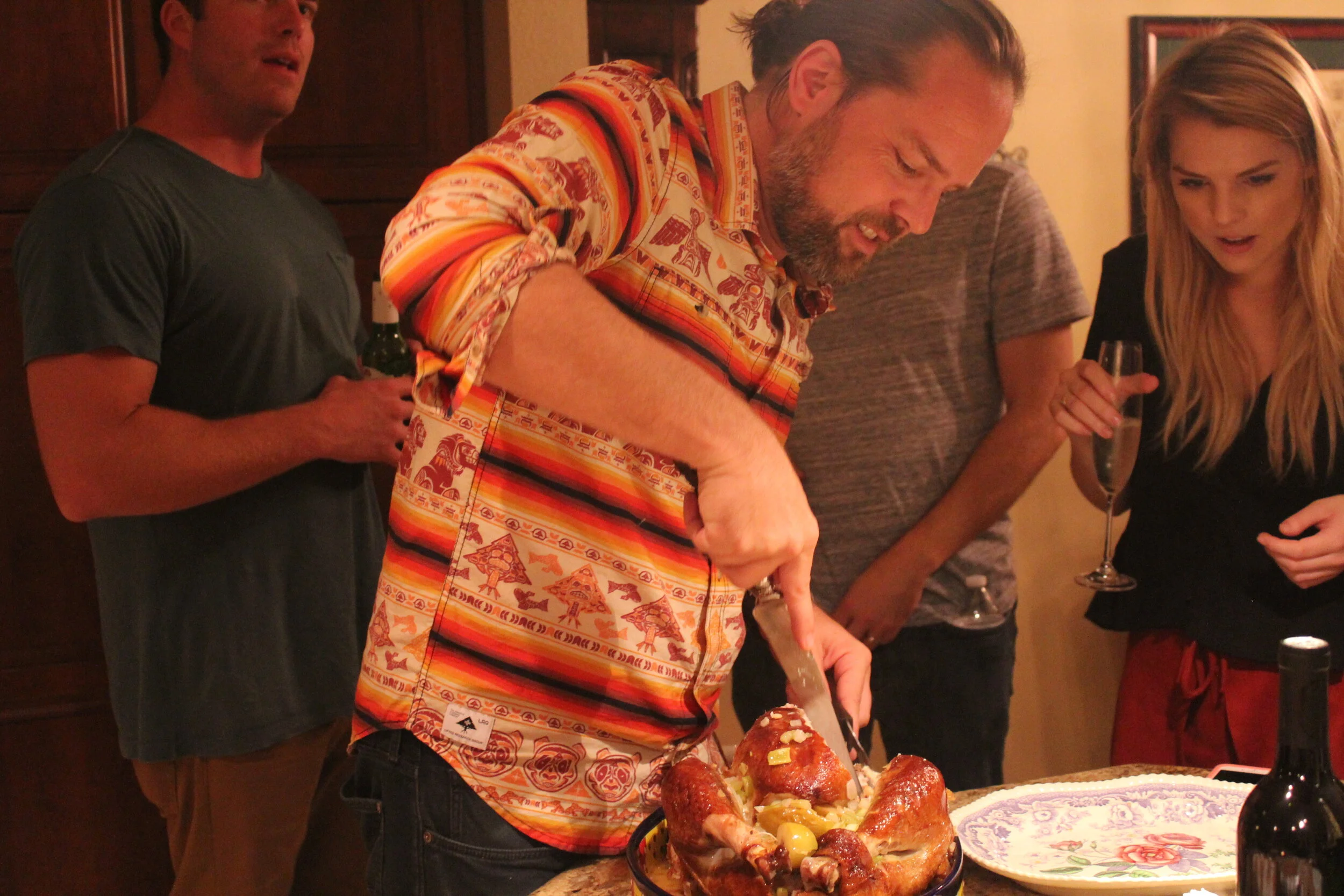
This poem reflects on gender roles and feasts, and the archetypes involved in these traditional meals. It also ponders whether we can’t sometimes put our liberal guilt to rest for a bit and receive blessings as the gifts they are. Here, I’m doing the one thing the dude is traditionally supposed to do… cut into something someone else prepared over a long morning, and get the glory for a blessing not his own. An ethicist named Stephen Webb thinks it’s significant that the Christian Eucharistic feast is vegetarian. He writes: “Meat not only reflects and upholds class distinctions; it also creates gender differences … sacrificial rituals serve to distinguish the roles of men and women by putting male priests in charge of the rituals that ancient people thought did the most to uphold social and even cosmic order. Throughout history men almost always have been in charge of the meat. This continues today, as any barbecue will demonstrate. Cooking meat on a fire, as with the ancient sacrifices, is a male-dominated activity. Killing animals was thought to be not dissimilar to going to war, and cutting meat involved the use of dangerous tools and knives.” Good Eating (Brazos, 2001).
“Make us a turkey, baby
like you’re a 1950s housewife,
then forgive me
for enjoying your gift.
Later, you can repent
of that misdirected text.
Receive absolution
say grace
break the wishbone
nod off.
It’s third quarter
I need to put away the stuffing
and all this other shit.
But it can wait
and the mess is a reminder
that we feasted
so I will sit.
THANKS
GIVING.”
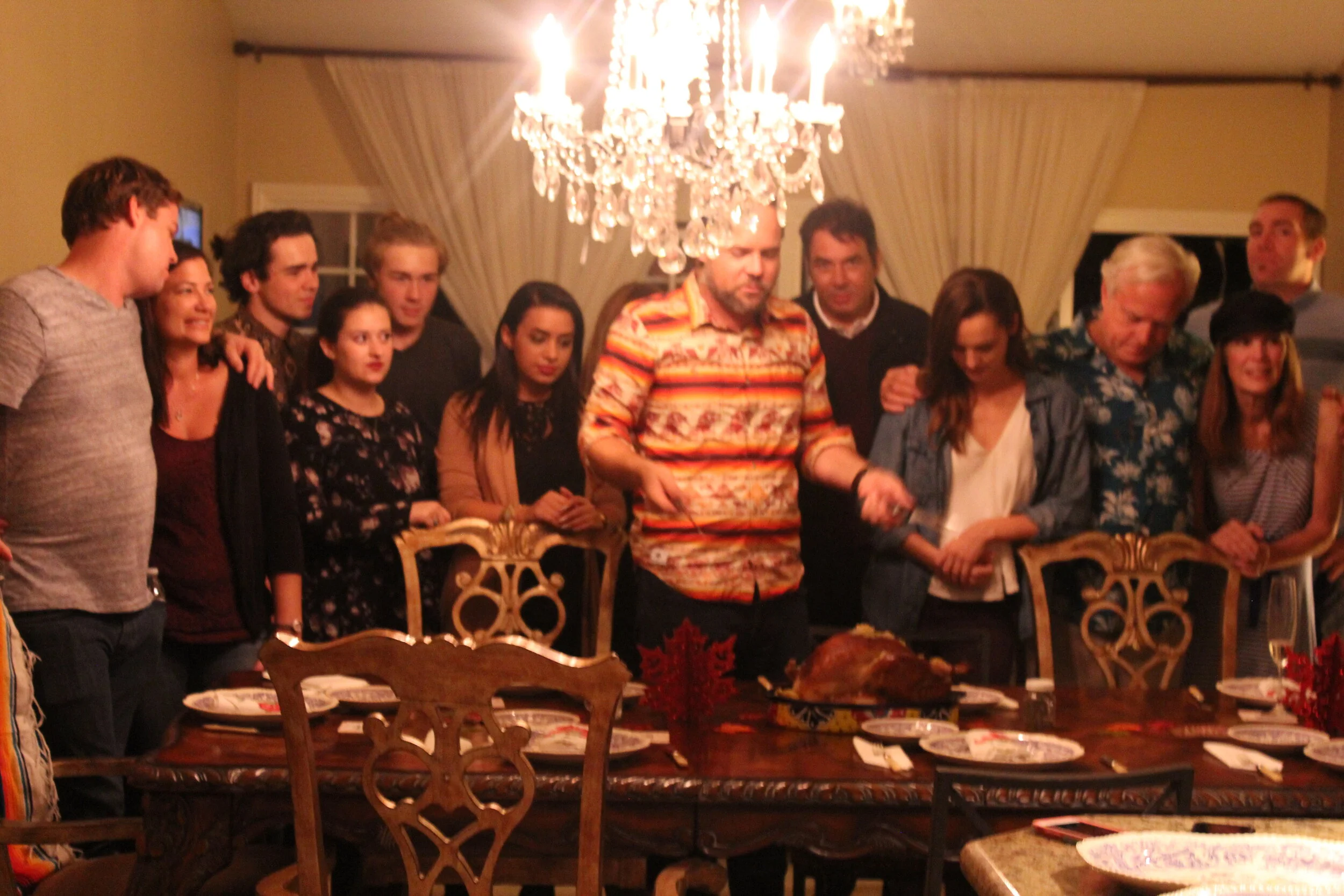
This family picture is funny. There are different levels of piety in this crew. Some are just hungry. Some are solemn. Our daughter in law to be looks on apprehensively; she’s a vegetarian.