
Glossary of Terms from the Tao Te Ching and How We Use Them
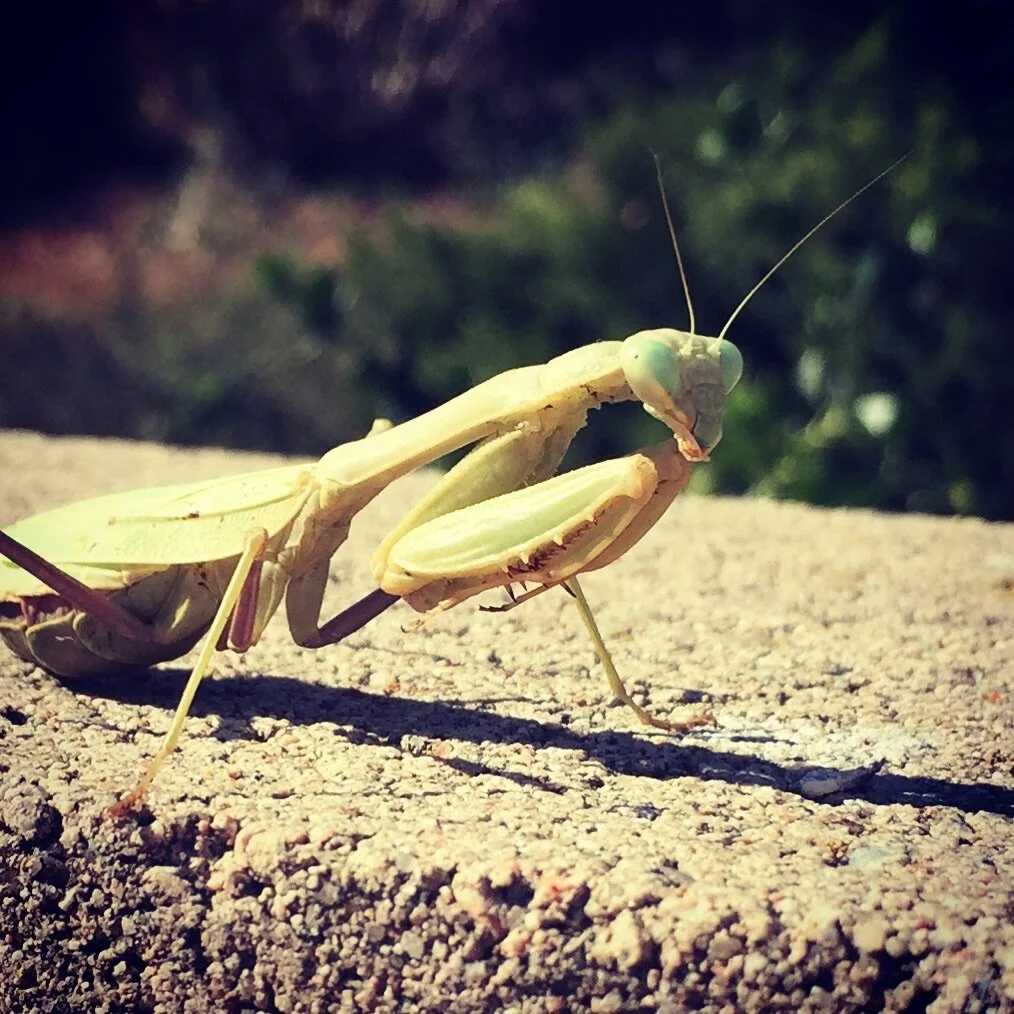
Like many ancient wisdom traditions (See Proverbs 6:6: “consider the ant, you slacker”) the Tao Te Ching reflects on natural phenomena and the behavior of the living beings, which are called the “Ten Thousand Things” in the original Chinese, though we stick with all living things or something to that effect.
Since we’ve been tossing out pieces of our reworking of the Tao Te Ching, we figured it would be good for people to have a place to go for some of the basic terms we employ. These will be updated as we finalize our work. We’ve already gone through a quick recasting of all 81 chapters, but now we’re working through commentaries and scholarly articles to fine tune each chapter in order. Stay tuned yourself, friends.
The Sage—The original characters 神人 (shen ren) means “holy person.” The sage is a saint in the way that, for Christians, the old saints were considered spiritually insightful, philosophically profound, and people of integrity. A sage cultivates and sustains the ideal state of mind and life. This is the great value of the Tao Te Ching: it can help someone like you or us become a sage and live at peace with our current state of existence. Throughout our rendering, we will use feminine pronouns for “The Sage,” because Lao Tzu emphasized Yin, the receptive, yielding, and fluid principle of existence. Conversely, when we translate words about “the crowd” or “everyone else,” we will use masculine pronouns, reflecting the idea that “men” are associated with Yang, the active principle that sometimes seems to be frantic, bustling, and lacking in peace. Despite all this, these principles are not meant to be tied to closely to biological questions of sex or more nuanced questions of gender. Men and women embody and draw upon both Yin and Yang energies.
We were tempted to bypass the complex questions of sex and gender by maintaining gender neutral pronouns and terms, but in keeping with the teachings of this text, we wanted to stick to concrete, embodied language and avoid too much abstraction. In other words, using gender specific pronouns is not meant to exclude but rather to embrace embodiment and specificity within the natural world. When a text lets a part stand for the whole (a figure of speech called synecdoche), we find that it is far more poetic and powerful.
We should also believe that inviting women to see themselves as potential sages—despite the overwhelming resistance to this throughout the history of human cultures, Eastern and Western—to be an important objective for this project. We are grateful to Stephen Mitchell, who was the first to use feminine pronouns for the sage. His version alternates between male and female. In our opinion, our practice of always using feminine pronouns turned out to work well as an aid to contrasting the bustling power-obsessed Yang world with the passive but incredibly strong Yin resources for our times. Hopefully, you’ll be able to keep an eye out for the implications of all this as you read the chapters.
Surfing the Tao—This is how we describe living in accord with the principles of the Tao and thus is the way to peace. Usually, it will be a way for us to indicate the hard to translate but core concept of Wu Wei, (無為) or acting by not acting or going with the flow. But because this is often understood we’ve resorted to the concept of surfing. Surfing makes use of natural forces while using minimal exertion. It doesn’t force things or swim against the current, but rather uses the great power of the current to go playfully where the surfer wants. It also has a strong sense of “nonviolence” or “noncoersion” or “not forcing things and thus using minimal effort.” In a sense it can be nonviolence, dispassionate action, acting without forcing things, channeling the forces of reality, working effortlessly, using gravity rather than rockets, solar power rather than pedaling.
Tao—This is the Way (道). We don’t translate it because, as the first line of this work informs us, it can’t really be defined. It is the way to go, the true way, ultimate reality, the source of everything. It is similar to the divine creative principle or “Logos Spermatikos” of the Stoic philosophers, and the identification of Jesus Christ with the “Word” or “Logos,” which is something like an operating system if we compare existence to what goes on with a computer. Leaving Tao untranslated is in the same spirit as the Jewish practice of referring to God as Hashem or “the Name,” and the practice of most English Bibles to substitute LORD for the powerful proper biblical name YHWH. It’s not so much that there should be superstitious fear in speaking of the Tao, but rather, there ought not be a translation that is too confining for the vastness of that to which the words point.
All of this touches on a long tradition within medieval European philosophy of history. For instance, St. Augustine pointed out that "If you understood him, it would not be God.” Later, Thomas Aquinas worked with the “way of analogy” (via analogia) because human words can only approximate divine realities. Others in the mystical tradition followed the method of apophatic theology, or the “way of negation” (via negativa) in which one only spoke of what God is not.
We are not here equating the Tao with Western concepts of God. We’ll address that topic in another place. What unites all of this is a respect for the sublime and ineffable, and a concern not to limit infinite realities with finite language too cavalierly.
Te—As with our decision to leave “Tao” untranslated, we don’t translate the term Te (德), which is important to this work. As with us, it is often properly rendered “virtue” in both the moral sense and in the same way that a virtue or power of coffee is to wake a person up or a virtue of coconut oil is its ability to soften skin. It is thus a sort of energy, similar to the Force in Star Wars. Moreover, there’s a sense in which this is like the Christian concept of the Holy Spirit. Originally, as used with Jesus when he was talking about “blasphemy against the Holy Spirit,” (Luke 12:8-10) his audience likely understood him to be referring the power of God or the hand of God working strongly. Though Hebrew ruach is feminine, here there is a sense in which Tao is feminine, an infinitely dark womb, while Te is a vital energy that is like Yang. Note that Tao gives birth to Te, which gives birth to a third phenomenon: Chi (氣), which is the vital energy or breath that then comes into the “Ten Thousand Things” or the living creatures in the world. Wasting this Chi on frustrating attempts to force things is something this book teaches us to avoid.
Father/Mother, He/She—When used for grand principles of existence, these terms allow for either a personal or impersonal interpretation. That is, one might be tempted to equate “Father” or the creative source of the physical world with God, Yahweh or Allah. This has some potential, and various older translations have spoken of God in their translations of the Tao Te Ching. In our version, we intended for ambiguity to remain ambiguous, since reading through the text does have something subtle to say about the concept of “God.” We will let you explore that on your own as you read. Likewise, there are sections where the language of a great “Mother” is employed, representing the inexhaustible fountain of life. This is conceived as the Divine Feminine or a Mother Earth goddess, especially in contemporary New Age circles. Ultimately, though these personal concepts can be helpful, and theism can arguably be accommodated by Lao Tzu’s philosophy, this text is almost certainly not speaking of a literal Father God or Mother Goddess, but rather of the principles behind those images, principles that are ubiquitous throughout the world’s mythologies. The key for us, as we sometimes intentionally crafted lines that alluded to Western religious idioms, was neither to “baptize” Lao Tzu’s ideas nor to suggest that the Christian or Jewish concept is equivalent. Rather, we believe that, for those folks like us, who grew up with the language and imagery of the Hebrew Bible and Christian Scriptures, drawing occasional comparisons to familiar concepts helps us to understand what Lao Tzu was trying to communicate. If you happen to come from a Christian background and want to explore ways to engage the Tao Te Ching that attempts to avoid both syncretism and also careless cultural accommodation, check out Hieromonk Damascene, Christ the Eternal Tao, which comes from an Eastern Orthodox perspective but can be of use to folks from other traditions, and Corey Farr’s podcast: A Christian Reads the Tao Te Ching, which we recently found. We haven’t heard beyond the first episode, but that first episode will speak to evangelicals who are coming at the Tao Te Ching from that perspective.